Special Educators for Children in Bangalore
Best Special Educators for Children in Bangalore
Cadabam's CDC provides specialized educational support for children who learn differently — whether due to learning disabilities, intellectual disability, autism, ADHD, or other developmental conditions. Our special educators go far beyond tutoring — they assess each child's unique learning profile, develop Individualized Education Plans (IEPs), deliver evidence-based remedial instruction, and coordinate with schools to ensure appropriate accommodations and support.
Book a Special Education Consultation | Call: +91 95355 85588
What Our Special Educators Do
Assessment and IEP Development
Our special educators begin with a detailed learning profile assessment — identifying how each child processes information, where their strengths lie, and exactly which academic skills need targeted support. Based on this assessment, they develop an Individualized Education Plan (IEP) with measurable goals, recommended accommodations, and a therapy schedule. We then coordinate with the child's school to ensure the plan is implemented.
Evidence-Based Remedial Instruction
For learning disabilities, our special educators use Orton-Gillingham methodology for dyslexia (a structured, multi-sensory approach to reading), multi-sensory math instruction for dyscalculia, handwriting intervention programs for dysgraphia, and metacognitive strategies ("learning how to learn") that transfer across all subjects. These aren't tutoring approaches — they target the underlying cognitive skills that enable learning itself.
School Coordination and Advocacy
Many parents struggle to get their child's school to provide appropriate accommodations. Our special educators help by writing detailed recommendation letters for schools, training parents on their rights under India's Rights of Persons with Disabilities Act (RPwD 2016), attending school meetings with families when needed, and providing teachers with practical classroom strategies tailored to the child's needs.
Conditions Supported
Our special education services support children with dyslexia and reading difficulties, dyscalculia and math challenges, dysgraphia and writing difficulties, ADHD-related academic struggles (disorganization, task avoidance, working memory), autism-related learning challenges (attention differences, executive function, communication barriers in classroom), intellectual disability (adapted curriculum, functional academics, life skills), and general academic underperformance linked to developmental conditions.
Shadow Teacher and School Support
Our special educators also provide school-shadow support for ADHD and collaborate with classroom teachers on accommodations.
Meet Our Special Education Team
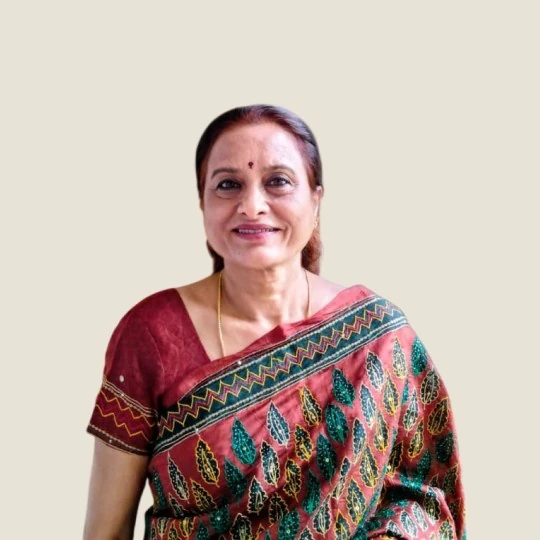
Rama Sridharan, Masters in Special and Inclusive Education (University of Northampton) — 30+ years in special education. Diploma in Special Education from KPAMRC. Specialises in ADHD and learning disabilities, with extensive experience writing IEPs, training school staff, and advocating for accommodations under the RPwD Act 2016.
Ms. Angela Ann George, PG Diploma in Special Education, M.Sc. Human Development — 3+ years of experience across mainstream and special-needs settings in India and the UAE, based at Cadabam's CDC JP Nagar. RBT (BACB) and QABA-certified ABA Technician, specialising in individualized assessments, behavioral support, and cognitive and social skill development for children aged 2–13.
Our special educators are not generalist tutors — every team member uses evidence-based methodologies (Orton-Gillingham for dyslexia, multi-sensory maths for dyscalculia, structured handwriting programmes for dysgraphia) and coordinates with the rest of the multidisciplinary team.
When Should You See a Special Educator?
A consultation is worthwhile when academic effort is no longer matching outcome — when a bright child is struggling more than they "should be". Specific signs:
- Reading is slow, laboured, or full of letter reversals well past Year 1
- Spelling stays inconsistent despite practice; the same word is wrong every time
- Maths feels stuck on simple operations long after peers have moved on
- Handwriting is illegible, painful, or much slower than the rest of the class
- Reports are full of "needs to focus more" or "not applying herself"
- A diagnosis is already in place (ADHD, autism, intellectual disability) and the school is not adapting work appropriately
Early intervention is most impactful in Years 1–3, when foundational reading and maths skills are being laid down — but well-targeted remedial work helps at any age, including teens preparing for board exams.
What to Expect in Your First Special Education Session
The first appointment is a learning-profile assessment of around 90 minutes. Your special educator spends time both observing your child working on academic tasks and running screening tools that probe reading decoding, fluency, comprehension, spelling, written expression, maths fluency, and working memory.
Based on the profile, the educator writes an Individualised Education Plan (IEP) with concrete goals, recommended classroom accommodations, and a remedial therapy schedule. We then liaise with the child's school — a recommendations letter, classroom strategies for the teacher, and meeting attendance when needed.
Book a Special Education Assessment | Call: +91 95355 85588
Frequently Asked Questions
What's the difference between special education and tutoring?
Tutoring re-teaches content — explaining this week's math chapter again. Special education strengthens the underlying cognitive skills needed for learning — working memory, phonological processing, visual-spatial reasoning, executive function. A tutor helps with today's homework. A special educator changes how your child's brain approaches learning, producing improvements that persist across all subjects.
Will my child need to go to a special school?
Most children receiving special education support at Cadabam's CDC attend mainstream schools with accommodations. We help families advocate for appropriate classroom accommodations and develop IEPs that schools can implement. Special school placement is considered only when a child's needs significantly exceed what mainstream schools can offer.
At what age should special education start?
As soon as learning difficulties are identified. For children with known developmental conditions, pre-academic skill building can begin as early as 3-4 years. For learning disabilities specifically, intervention is most effective when started in early primary school (ages 5-7) when foundational reading and math skills are being established.
Book a Special Education Assessment | Call: +91 95355 85588
Available at: JP Nagar | Kanakapura Road | Kalyan Nagar, Bangalore