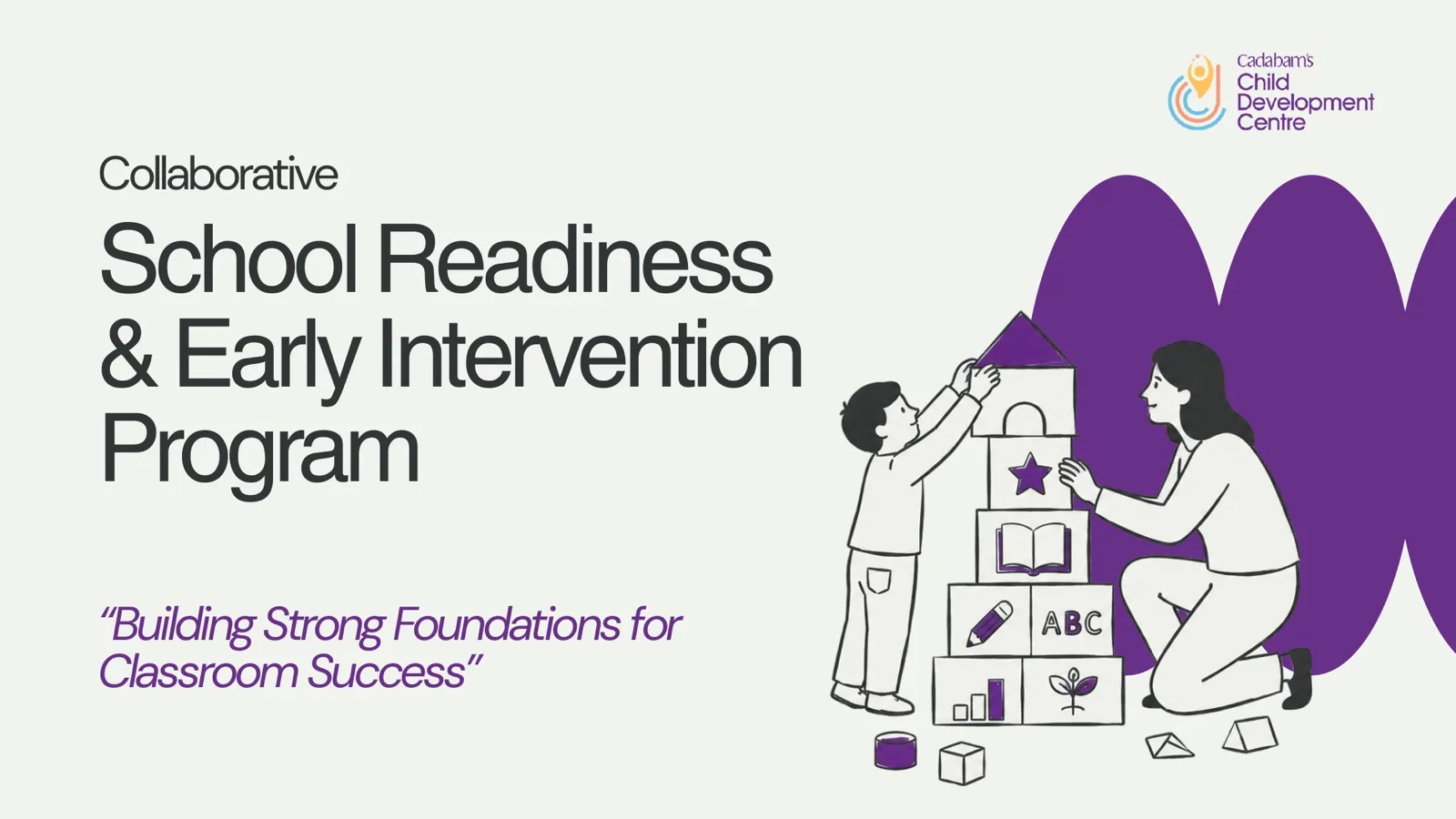
School Readiness & Early Intervention Programme
“Building strong foundations for classroom success.”
Every child develops at their own pace — but for some children in the preschool and early-years years (ages 2–6), settling into a classroom is genuinely hard. They may not be able to sit through a conversation, refuse to go to school, struggle with separation, or find social settings overwhelming. They may have a speech delay, sensory-integration differences, difficulty taking turns, or challenging behaviour. For these children, school feels overwhelming — not because they aren't capable, but because they need the right support at the right time.
Our School Readiness & Early Intervention Programme is a collaborative programme that helps children build the skills they need to settle and succeed in school — and get them back into the same classroom, with confidence.
What is school readiness?
School readiness is beyond academics. It's the whole set of skills a child needs to participate and thrive in a classroom. Our programme focuses on:
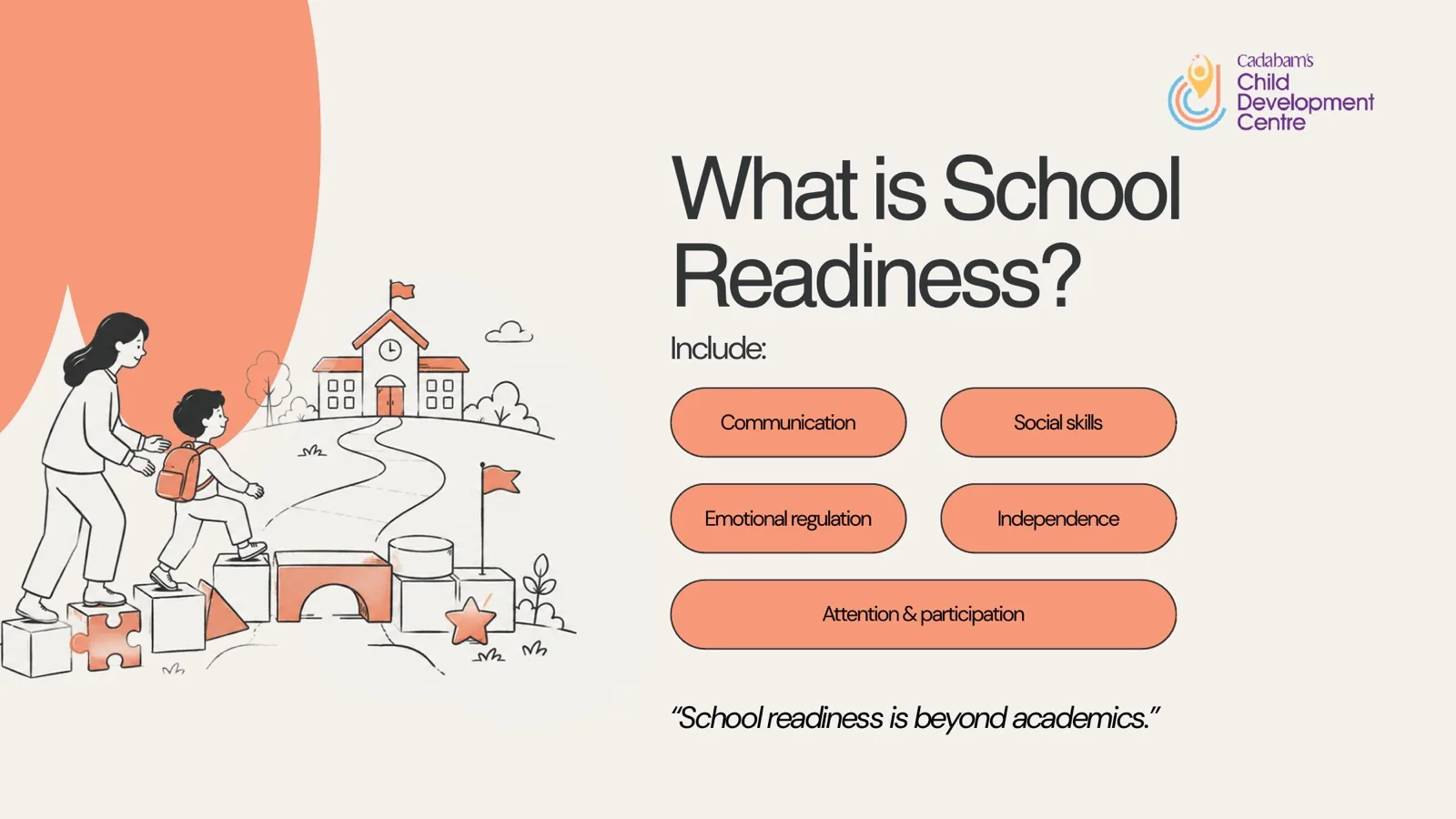
- Communication — being able to express needs, understand others, and build language
- Social skills — sharing, taking turns, playing with others, and reading social cues
- Emotional regulation — staying calm, managing frustration, and coping with separation
- Attention & participation — being able to sit, listen, and engage in activities
- Independence — confidence with daily routines and self-help skills
When these foundations are strong, academic learning can follow naturally.
Why early support matters
The research is clear: early, structured support leads to the best outcomes. When a child is helped early, they experience:
- Better classroom participation
- Reduced behavioural concerns — including aggression, biting, and refusing to take turns
- Improved emotional wellbeing — staying calm rather than anxious or agitated
- Stronger learning foundations — attention, focus, and the confidence to try
The goal is not to label children. The goal is early understanding and the right support, so no child is left struggling on their own.
Our collaborative approach
We work as a team — and the child is at the centre. When everyone works together, outcomes are far better.
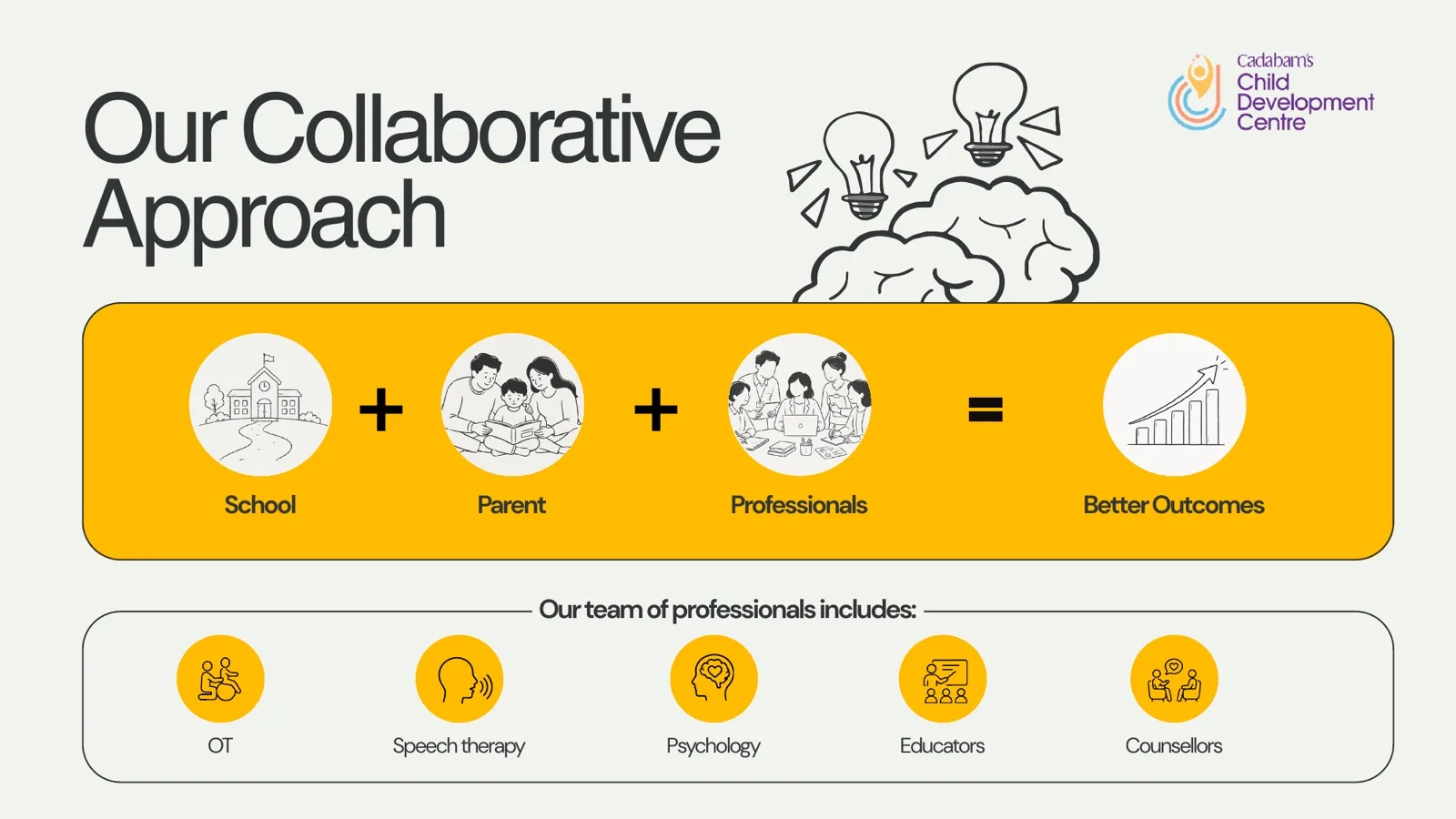
School + Parents + Professionals = Better outcomes
Our team draws on the full range of Cadabam's CDC expertise, based on what each child needs:
- Occupational therapy (OT)
- Speech therapy
- Psychology
- Special educators
- Counsellors
How the programme works: a 3-step model
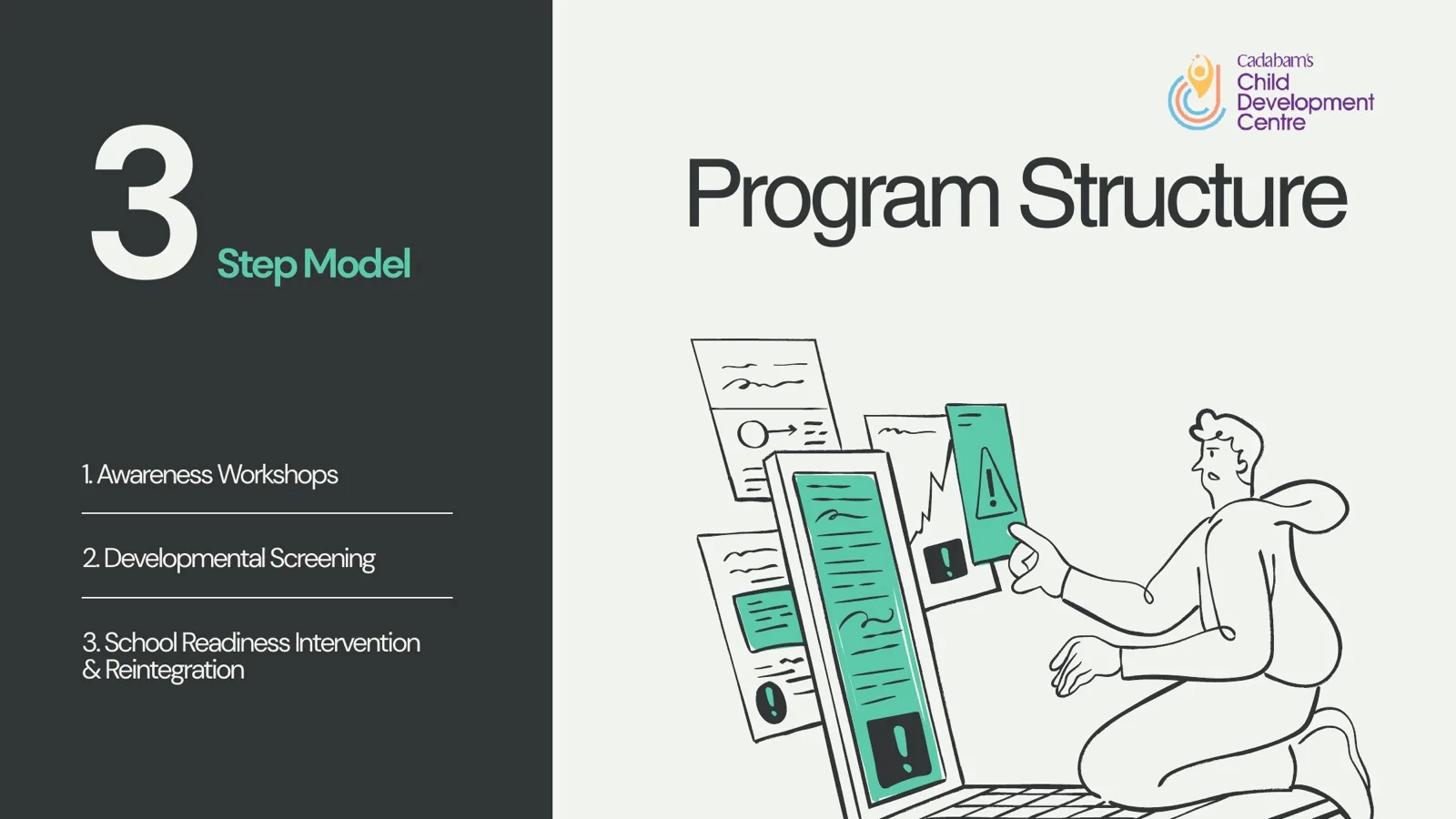
Step 1 — Awareness workshops & teacher training
We begin by building awareness and early-identification skills. We run awareness sessions for parents and teachers to help them recognise the early signs that a child may be struggling to settle. We can also run teacher-training sessions so educators feel confident identifying children who need support and knowing how to help.
Step 2 — Developmental screening
Using our GrowSmart developmental screening, we can screen a whole class quickly — or focus on individual children a school has flagged. A school can create a custom screening room, send the screening to parents (it takes about 30 minutes), and our professionals review the results and produce a screening report. That report guides the next step.
Step 3 — School readiness intervention & reintegration
For children who need support, we design a school-readiness intervention. The child may come to Cadabam's CDC for anywhere from one to three hours a day, where our team works on communication, regulation, attention, social skills, and independence. As they build these skills, we gradually reintegrate them into the same school — first half-day, then full-day, until they're settled back in the classroom.
Benefits for schools & parents
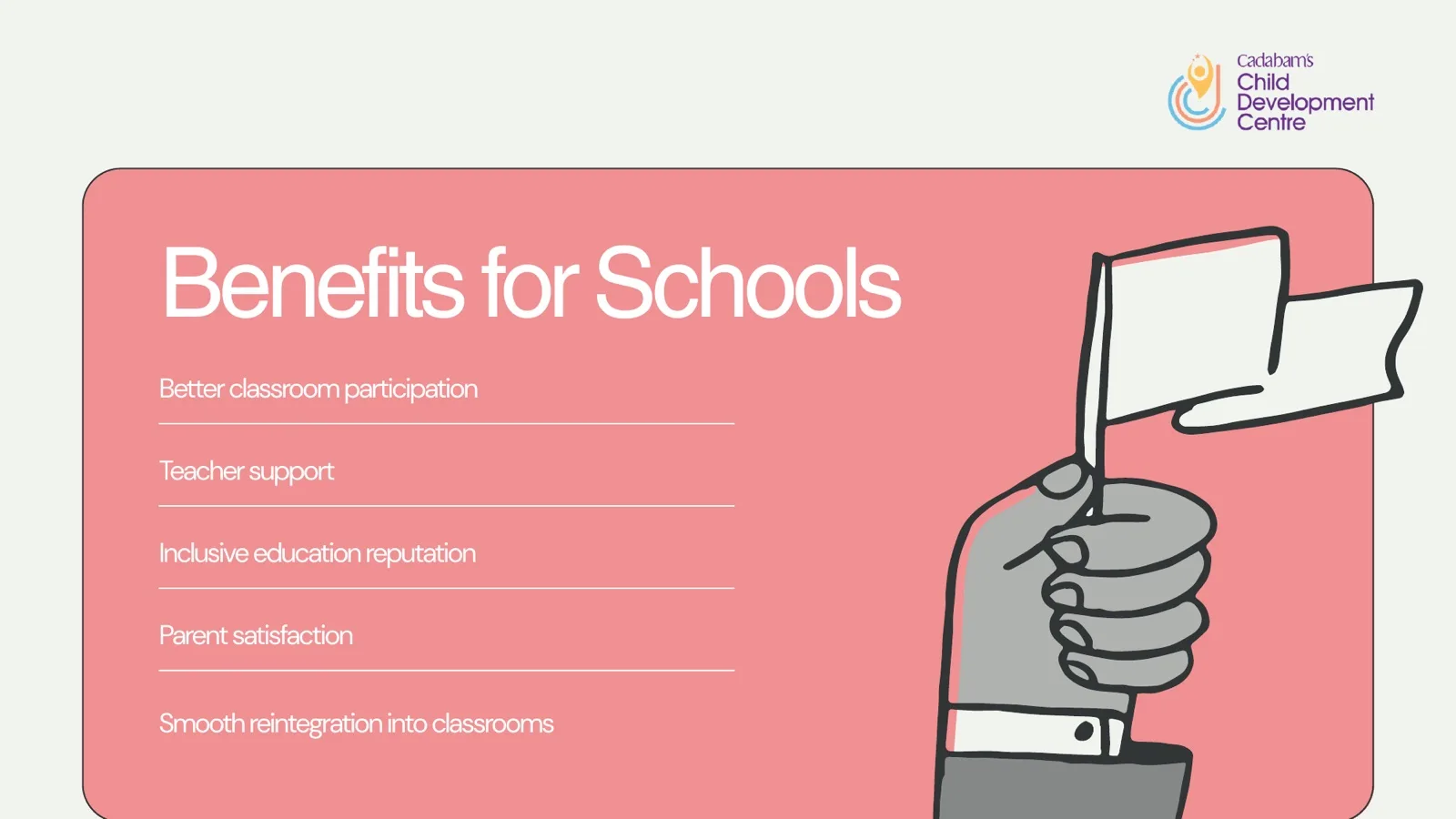
Partnering with Cadabam's CDC helps schools and families:
- Better classroom participation from children who were struggling
- Genuine teacher support — educators aren't left to manage it alone
- An inclusive-education reputation — a credible story to tell parents
- Higher parent satisfaction — smoother reintegration, less stress at home
- A clear referral path — for children who need more specialist support
Where we work
We're starting with schools near our JP Nagar centre and expanding to Kanakapura Road — with two centres nearby, families can choose the one that's most convenient. If you're a preschool or Montessori in the area, we'd love to talk.
Who is this for?
This programme is for preschool, nursery, and Montessori-aged children (2–6 years) who:
- Can't sit through a conversation or activity
- Refuse to go to school or show school anxiety
- Struggle with separation anxiety
- Have a speech delay or language difficulty
- Find social settings, turn-taking, or sharing difficult
- Show aggressive or biting behaviour
- Have sensory-integration differences
Frequently Asked Questions
What is school readiness?
School readiness is the set of skills a child needs to participate and thrive in a classroom — communication, social skills, emotional regulation, attention, and independence. It's about more than academics.
At what age is this programme for?
Our School Readiness & Early Intervention Programme is designed for children aged approximately 2 to 6 years — the preschool, nursery, and Montessori years.
Is this a diagnosis?
No. This is a support and intervention programme. Our developmental screening is a screening aid reviewed by qualified clinicians — it is not a diagnosis and does not label children. If a child needs it, we recommend a formal assessment.
How long does a child stay in the programme?
It depends on the child. Children typically attend for anything from one to three hours a day. Some children start with part-time support and gradually reintegrate to school; children who need more intensive support may spend a few weeks with us before gradually transferring back to school.
Which schools can partner with Cadabam's CDC?
We work with preschools, nurseries and Montessori schools — partnering with the school team, the parents, and our professionals. We're currently focused on schools near our JP Nagar and Kanakapura Road centres in Bangalore.
Can you train our teachers?
Yes. We can run teacher-training and awareness sessions to support early identification and give educators practical strategies for helping children settle in the classroom.
What if a school doesn't take the full programme?
That's fine. We can tailor how we work together — from awareness workshops and developmental screening, to a referral partnership where the school refers children to Cadabam's CDC when they need specialist support.
Get in touch
If you're a preschool, Montessori, or school interested in the School Readiness & Early Intervention Programme — or a parent who'd like to learn more — contact Cadabam's CDC. We'd be happy to discuss how we can support your children and your school.
Download the brochure
Download the School Readiness & Early Intervention Programme brochure (PDF) to share with your school or keep for reference.
Download brochure (PDF)Prefer an overview of all three programmes in one brochure? Download the combined flyer.
Download the combined programme overview (PDF)